Skip to content
Brentwood Rodent Control

Guide · what you're hearing

Signs of Rats in Your Attic or Walls

Short answer

Scratching or running overhead after dark is the usual first sign. Confirm it with droppings, gnaw marks, greasy rub marks or tunnels in the insulation. Then don’t poison, sweep or vacuum. Have the house inspected for the way in.

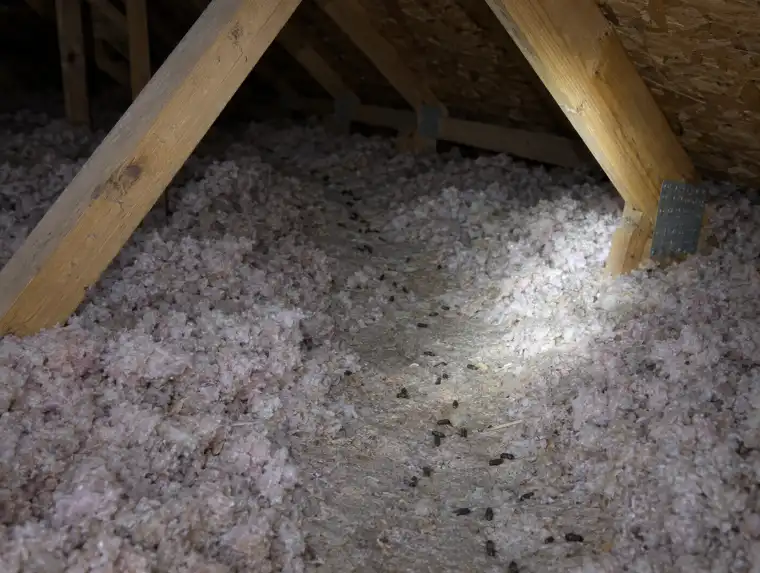
Attic with wood trusses and pink blown-in insulation, a flashlight beam showing a flattened path scattered with droppings

The signs, in the order people notice them

1. Sounds at night

Scratching, running or something rolling across the ceiling between dusk and dawn. Noise in the attic or a drop ceiling is on UC IPM’s list of rat signs.

2. Droppings

Along rafters, on top of insulation, in the garage or under sinks. Don’t sweep or vacuum them. See attic cleanup for the CDC method.

3. Gnaw marks

On wiring, flex duct, trim and stored boxes. UC IPM notes rat incisor marks are about 1/6 inch wide, roughly twice a mouse’s.

4. Insulation tunnels

Flattened runways through blown-in insulation, and shredded nesting material near the eaves.

5. Rub marks

Dark, greasy smudges along beams, pipes and the edges of holes they use often.

6. Outside

Rats on fence tops, branches or utility lines at dusk, and fruit hollowed out on the tree.

Rats or mice?

Mice are smaller (about half an ounce), nest in finely shredded paper or fiber, and get in through openings just over a quarter inch. Rats need about half an inch. The sealing approach is the same, but mice need finer work, so tell the inspector which you’ve seen.

What to do first

  • Don’t put poison in the attic. Most anticoagulant baits are banned for home use in California anyway, and a poisoned rat can die where you can’t reach it.
  • Don’t sweep or vacuum droppings. Follow the CDC’s wet-cleaning steps.
  • Write down when and where you hear it, and photograph droppings or damage.
  • Get an inspection that finds every entry point, not just a trap in the attic.
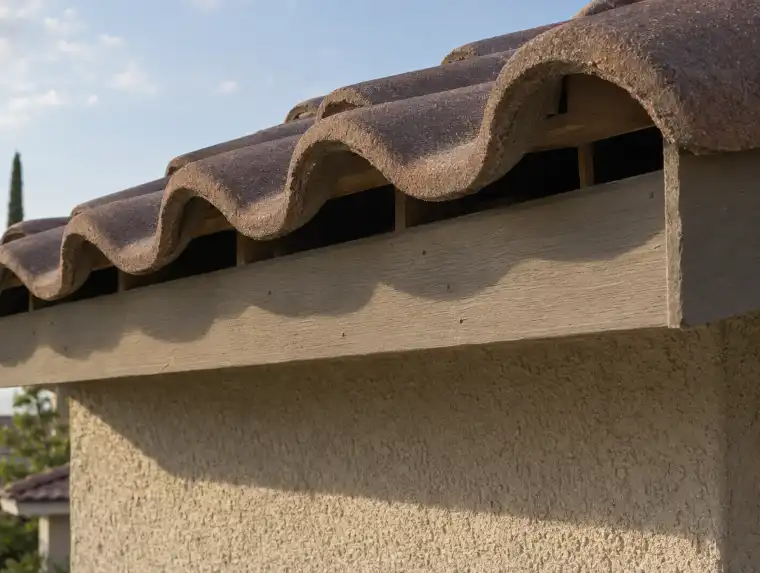
Edge of a clay tile roof where the curved tile ends leave open gaps above the fascia board
Open tile ends at the eave are a common way in.

Next: rat removal, rodent proofing, or how to tell roof rats from Norway rats.

Attic rat questions

How do rats get in the attic?

Usually from above: a tree limb or vine touching the roof, then through a torn vent screen, an open tile end at the eave, or a gap where roof sections meet. Rats need a gap only about half an inch wide.

Will rats leave the attic on their own?

Rarely for good. An attic with a way in and food nearby, like fruit trees, pet food or bird seed, is good habitat. Activity can drop and then come back, especially in fall.

Does seeing one rat mean an infestation?

Not necessarily, but rats are mostly active at night, so one sighting often means more out of view. Look for droppings, gnaw marks and noises, and get an inspection if you find them.

Is it rats or squirrels in my attic?

Timing is the best clue. Rats are mostly active at night. Tree squirrels are active by day and usually get in through gaps under the eaves or where roof sections overlap. Heavier thumping and torn vents can mean a raccoon.

What does the "5-day mouse rule" mean?

It's a phrase you'll see online, but it isn't a formal standard from a public-health or extension source. The useful takeaway: act quickly. UC IPM says house mice have 5 to 10 litters a year.

Hearing it at night? Have the house inspected before it spreads.

Call or send a short request. You'll get a call back to set up an inspection, see the openings that were found, and get a written quote.

Call nowGet a quote