
Signs you have rats
UC IPM lists the signs to look for: droppings, gnaw marks, greasy rub marks along beams and holes, noises in the attic or ceiling, and rats seen at night traveling along fence tops or utility lines. Fruit hollowed out while it’s still on the tree is another common one in East County back yards.
Not sure what you’re hearing? Start with signs of rats in the attic.
Roof rat or Norway rat?
It matters because it tells the inspector where to look.
| Feature | Roof rat | Norway rat |
|---|---|---|
| Weight | 5–10 oz, sleek | 7–18 oz, heavy |
| Tail | Longer than head and body | Shorter than head and body |
| Lives | Above ground: trees, dense vines, attics, wall voids | Burrows; basements and ground floors |
| Prefers | Fruit, tree nuts, berries | Grains, meat, fish, nuts |
| Gets in | High: vents, roof gaps, branches over the roof | Low: foundation gaps, under doors |
Source: UC IPM Pest Notes: Rats (updated June 2025).
How removal works
Inspection. The roofline, attic, garage, crawl space and yard get checked for droppings, rub marks and openings. You should get photos of each entry point and a written plan.
Trapping. Traps go where rats travel. For roof rats that means off the ground, on ledges, rafters and fence rails. For Norway rats it means along walls in dark corners.
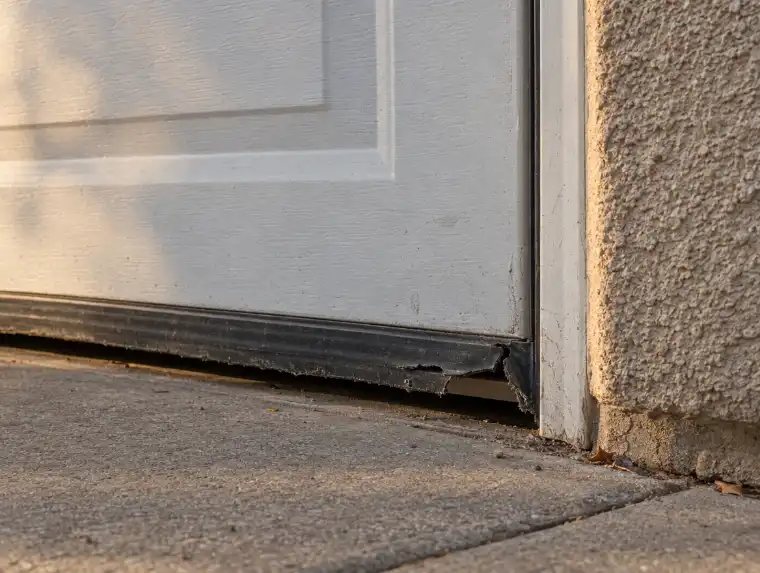
Sealing. Vents get galvanized hardware cloth, gaps around lines and pipes get metal, and garage doors get new bottom seals. That’s the rodent proofing step.
Check and reset until nothing new is caught and no fresh droppings appear.
Cleanup. Heavy activity leaves droppings and soiled insulation, and that’s a separate job: attic rodent cleanup.
Traps, not poison
UC IPM calls snap traps “the safest, most effective, and most economical” way to deal with rats around a home, and trapping lets you remove the bodies instead of leaving them to decay where you can't reach them.
California law points the same way:
- 2021: AB 1788 banned the second-generation anticoagulants (brodifacoum, bromadiolone, difenacoum, difethialone) outside narrow exemptions.
- 2024: diphacinone became a restricted material, with residential use prohibited.
- 2025: chlorophacinone and warfarin followed. Homeowners can’t buy or use them.
What’s left for licensed operators are a few non-anticoagulant baits in tamper-resistant stations within 50 feet of a structure.
DIY or hire someone?
You can probably handle it when
- You've seen one rat outside and no signs indoors
- Activity is in the garage at ground level and you can find the gap
- The fix is pruning branches, picking up fruit and adding a door sweep
Hire someone when
- You hear them in the ceiling or walls
- The openings are on the roof or at the eaves of a two-story house
- There are droppings spread across the attic insulation
- You've trapped rats before and they came back
What it costs
Published national guides put rat removal anywhere from about $150 to $650+, and sealing from about $200 to $1,400+, from a few openings to a full exclusion plan. Together that's a few hundred dollars to $2,000+ before any attic cleanup, and Bay Area prices often run higher. The real number depends on the house and is set after an inspection. Ranges and sources are in the cost guide.
Serving Brentwood, Oakley, Antioch and Discovery Bay.
Sources
- UC IPM Pest Notes: Rats: updated June 2025
- California DPR: chlorophacinone and warfarin restrictions: December 20, 2024
- California DPR: diphacinone restrictions: December 18, 2023
- Fish and Game Code §4005
- HomeAdvisor: Rat exterminator cost: updated June 19, 2026