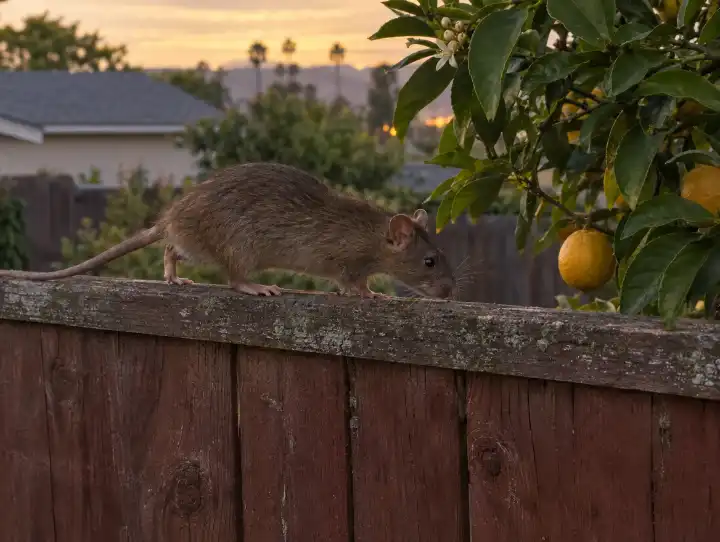
How to identify a roof rat
According to the University of California Statewide IPM Program, roof rats are sleek with a pointed muzzle, large ears, and a tail longer than the head and body combined. Norway rats are heavier and blunter, with a shorter tail.
| Roof rat | Norway rat | |
|---|---|---|
| Build | Slim, agile climber | Heavy, stocky |
| Tail | Longer than head and body | Shorter than head and body |
| Nests | Attics, wall voids, trees, dense vines | Burrows, crawl spaces, ground level |
| Gets in | High: vents, roof gaps, overhanging limbs | Low: foundations, under doors |
Why roof rats end up in your attic
UC IPM notes that roof rats thrive in warm climates and mature landscaping, travel along fence tops and overhead utility lines, and can get through openings larger than a quarter inch. A torn gable vent or a gap at a roof return is all it takes. Their diet includes fruit, nuts, berries, snails and slugs, so backyard fruit trees and dense ivy are a draw.
Signs of roof rats
- Gnawed fruit still hanging on citrus and other trees
- Droppings in the attic or on top of walls and rafters
- Rats seen on fences or power lines around dusk
- Scratching overhead at night
More detail in signs of rats in the attic.
How to keep roof rats out
UC IPM’s recommended approach is exclusion plus habitat changes:
- Seal openings into the house, including vents and roof gaps.
- Prune tree limbs back at least 6 feet from the roof.
- Remove or thin ivy and other climbing vines on walls and fences.
- Pick up fallen fruit and don’t leave pet food out overnight.
- Trap in elevated locations where rats travel.
Sealing a whole roofline is usually a professional job. See rodent proofing and rat removal, or check what it costs.
Source
- UC Statewide IPM Program: Rats (Pest Notes) — updated June 2025