Rodent Control & Proofing in Brentwood, CA
Rats need a gap about half an inch wide, and mice need half that. Get every opening found, the rodents already inside removed, and the house sealed so they can’t come back.
Brentwood, Oakley, Antioch and Discovery Bay.

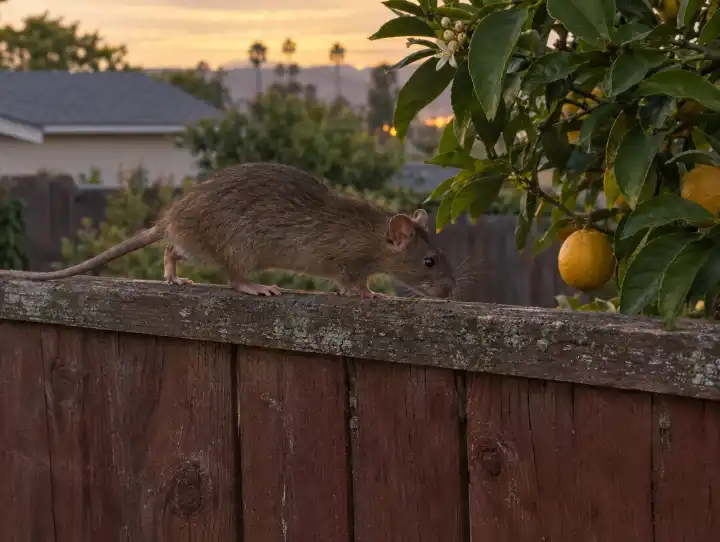
- Branches near the roofRoof rats climb fruit trees and jump to the roof. Cut back limbs that touch or hang over it.
- Roof and plumbing ventsTorn or rusted vent screens are a direct route into the attic.
- Eaves and tile endsGaps where the roof meets the wall and open tile ends at the edge get checked from a ladder.
- Where lines enter the wallAC, gas, cable and irrigation lines often leave a gap around the hole.
- Fence topsThe top rail of a fence is a roof rat's highway between yards.
What are you noticing?
Start with what you’ve seen or heard. Each one points to a different likely cause.
Have the house inspected
Send a short request and you’ll get a call back to set up an inspection and a written quote.
- You describe what’s going on. Four fields, under a minute.
- You get a call back to set up an inspection.
- You see each opening that was found and get a written quote. You decide.
Rather talk now? Call (925) 966-1407
Why sealing the house matters more in California
Traps and bait deal with the rats you have today. If the vent screen, roof gap or pipe hole they used is still open, new ones move in. Sealing is the step that ends the cycle.
It also matters because of the law. California banned most residential use of second-generation anticoagulant baits in 2021, then restricted diphacinone in 2024 and chlorophacinone and warfarin in 2025. That leaves trapping and exclusion as the main tools around homes, and a poisoned rat dying inside a wall was always a bad outcome anyway.
What good sealing looks like
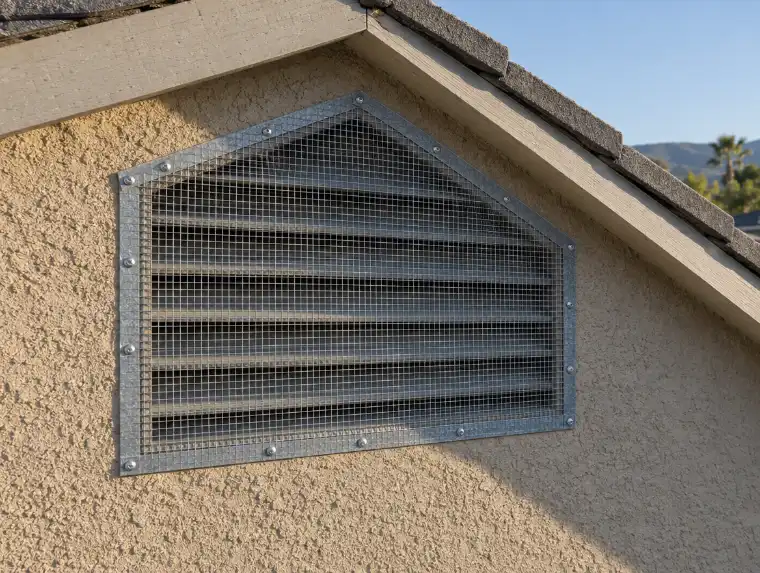
- Metal, not foam. UC IPM notes rats chew through plastic, foam, wood and caulk. Vents get galvanized hardware cloth or expanded metal, and gaps get sheet metal or mesh backed with sealant.
- Every opening over a quarter inch. That’s UC IPM’s guideline. Rats squeeze through about half an inch, and mice through openings just over a quarter inch.
- Photos of each repair, so you can see what was done on a roof you won’t climb.
How a rodent job usually runs
Inspect
Roofline, attic, garage, crawl space and yard. You should get photos of each entry point and a written plan.
Remove
Traps go where the rats travel, off the ground for roof rats, and get checked and reset on follow-up visits until activity stops.
Seal
Vents, roof gaps, line penetrations and garage door corners get closed with metal.
Clean up
Only if needed: droppings, nests and soiled insulation, done with wet methods per CDC guidance.
What rodent control costs
Prices vary widely from house to house, and Bay Area prices often run above national figures. These are published national ranges, not quotes. The actual price is set after an inspection.
See the full cost guide and sources| Job | Published range |
|---|---|
| Inspection | $75 to $200+ |
| Rat removal (trapping) | $150 to $650+ |
| Sealing entry points to full exclusion | $200 to $1,400+ |
| Attic cleanup and new insulation | $600 to $6,000+ |
| Wildlife removal (raccoon, skunk, opossum) | $150 to $600+ |
What’s different about rodents in East County
Fruit trees and farm edges
Brentwood’s own city government calls its farms central to the city’s culture, and backyard citrus and stone fruit are everywhere. UC IPM lists fruit, tree nuts and berries as roof rats’ preferred food, so a fruit tree touching the roof is both a meal and a bridge.
Fall is when they move in
The county vector control district says rodent calls rise in fall as rats and mice look for somewhere warm and dry, and UC IPM notes mice often move indoors as nights get colder. Roof rats are active all year.
Newer homes aren’t immune
Tile roofs with open ends at the eave, gable vents and AC line sets give rats the same openings on a recent build as on an older house. Age changes how many openings there are, not whether there are any.
Water and docks
Discovery Bay sits on Delta channels, and many homes have private docks, boathouses and dense waterside planting: more places to shelter and more to inspect. More on Discovery Bay
Questions people ask before they call
How do I get rid of rats in my attic for good?
Remove the rats that are inside with traps, then seal every opening they can use, including vents, roof gaps, line penetrations and garage door corners. UC IPM says rats can pass through a gap about half an inch wide and recommends sealing anything over a quarter inch with metal, not foam or plastic. Trapping without sealing is the most common reason rats come back.
Will rats leave the attic on their own?
Not reliably. An attic with food nearby, like fruit trees, pet food or bird seed, and a way in is good habitat. Activity can drop for a while and then come back, especially in fall when rodents look for shelter.
How much does rodent proofing cost in Brentwood?
It varies a lot with the house. Published national guides put rat removal anywhere from about $150 to $650+, and sealing anywhere from about $200 to $1,400+, from a few openings to a full exclusion plan. Attic cleanup is extra and can run into the thousands. Bay Area prices are often higher. The actual price is set after an inspection.
Can I just use poison?
California has restricted most anticoagulant rodent baits around homes since 2021, with more restrictions added in 2024 and 2025. A poisoned rat can also die inside a wall or the attic, where it's hard to reach. Traps plus sealing is the standard approach.
Does homeowners insurance cover rodent damage?
Many policies exclude damage from rodents and pests, but policies differ. Check your own policy or ask your insurer before assuming either way.
Hearing it at night? Have the house inspected before it spreads.
Call or send a short request. You'll get a call back to set up an inspection, see the openings that were found, and get a written quote.